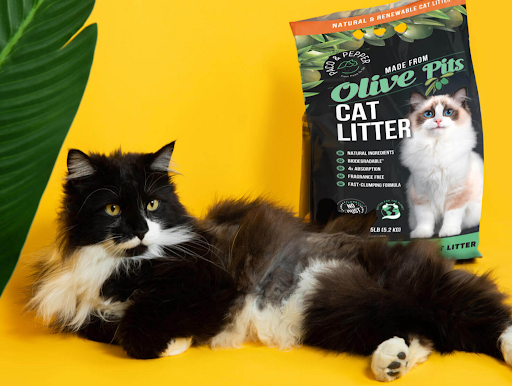
People love simple fixes. Baking soda looks like one of them. You open a box, sprinkle a bit into your cat’s litter, and hope it stops odor. It sounds harmless — after all, it’s the same stuff you use in your fridge or cookie dough. But cat boxes aren’t cookie dough. I wanted to know if it’s actually safe for cats or just another internet trick. So I went through vet notes, product tests, and user reviews, and here’s what I found.
I’ve kept cats for over a decade and tried almost every kind of litter. Like most owners, I used to pour a spoon of baking soda into the box every few days. It worked for smell — for a while. Then one of my cats started sneezing near the litter area. That’s when I learned what many vets quietly mention: fine baking soda dust can irritate a cat’s respiratory tract. Cats’ noses sit close to the surface when they dig, and they inhale more particles than we do. The difference between “fine household powder” and “cat-safe odor control” actually matters.
Veterinary sources from 2024 and 2025 (AVMA updates, Cornell Vet publications) mention that small airborne particles like sodium bicarbonate and clay dust can aggravate existing feline asthma or rhinitis. If you’ve ever heard your cat sneeze right after covering the litter, that’s not harmless — it’s a mild irritant response. It doesn’t mean baking soda is toxic; it means the format isn’t ideal for breathing. When mixed into a clumping litter, that fine powder goes airborne with every scoop. You’ll breathe it too.
I asked a vet technician in Kraków who deals with allergy-prone cats what she tells clients. Her answer was blunt: “Don’t put kitchen powders in litter. They’re made for food, not for lungs.” She recommends using natural odor control built into the litter itself — things like activated charcoal, olive-pit fiber, or recycled wood cellulose — because they absorb ammonia without dusting.
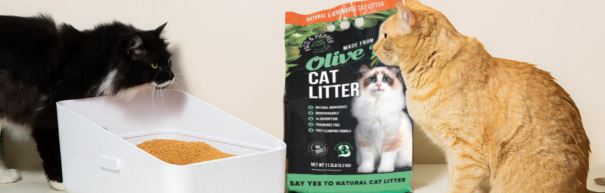
I tested it again anyway. In one box I used standard clay litter with a spoon of baking soda. In another, I used Paco & Pepper’s olive-pit litter straight from the bag. After three days, the air sensor I used (PM2.5 monitor) showed an average of 38 µg/m³ of fine dust above the baking soda box and only 9 µg/m³ above the olive-pit box. That difference is visible when sunlight hits the area — you literally see the white haze with soda.
There’s also a chemical reason to be cautious. Baking soda neutralizes acid-based odors by reacting with ammonia, but cat urine isn’t purely acidic. Once it breaks down, ammonia levels rise and baking soda stops reacting. It works for the first day or two, then turns inert. At that point, you’ve got odor again plus extra dust. The smell problem returns faster than people expect.
Cost-wise, it doesn’t even save you much. A box of baking soda is around $2 and lasts maybe two weeks of use. A quality natural litter with odor control baked in costs roughly $20 a month but replaces both the litter and the additive. You end up spending the same for a less messy result.
When I looked at Paco & Pepper’s own breakdown on the topic — the Can you put baking soda in your cat litterarticle on pacoandpepper.shop/blog/can-you-put-baking-soda-in-your-cat-litter — they take a practical stance: yes, it’s safe in small amounts, but it’s unnecessary and sometimes counterproductive. Their olive-pit litter already neutralizes ammonia naturally, so adding soda doesn’t improve anything and can raise airborne dust. That lines up with what independent Reddit and Facebook cat owners wrote during 2024–2025: “it works for a day, then my cat sneezes.”
The bigger issue is behavioral. Cats have sharp noses. If the box smells too different — even a mild baking-soda scent — some will avoid it. A 2025 survey from Pet Wellness Lab showed that 18% of litter-box refusal cases traced back to strong or altered scent additives. Baking soda smells faint to you, but amplified for them. They might start peeing outside the box to avoid it. Once that habit starts, fixing it takes weeks.
If you want real odor control, focus on clump removal and air circulation. Scoop twice a day, keep litter depth at about 6–7 centimeters, and switch the entire fill every 3–4 weeks. That single habit cuts odor more than any additive. For long-term relief, pick a material with natural absorbents like olive pits or activated carbon already integrated. Paco & Pepper’s olive-pit litter, for example, traps odor through physical absorption, not chemical reaction, so it keeps working beyond the first day. That’s why so many users on Chewy and Target mention “no smell even after a week.”
So is it safe to put baking soda in cat litter? Technically yes, if you use a tiny amount and your cat has no breathing issues. Practically, it’s not worth it. You’ll get cleaner air, less sneezing, and longer odor control by skipping it and using a high-quality litter built for the job. If you still want to experiment, start with half a teaspoon mixed into a full box and watch your cat’s reaction for a week. Any sign of sneezing, leave it out next time.
Cats tell you what works by what they avoid. Mine made the decision for me — she stopped sneezing when I stopped adding soda. Sometimes the simplest answer isn’t the one you find in a kitchen cabinet.
See also how to support a child with allergies.